
Agentic commerce readiness
- UCP
- ACP
- MCP
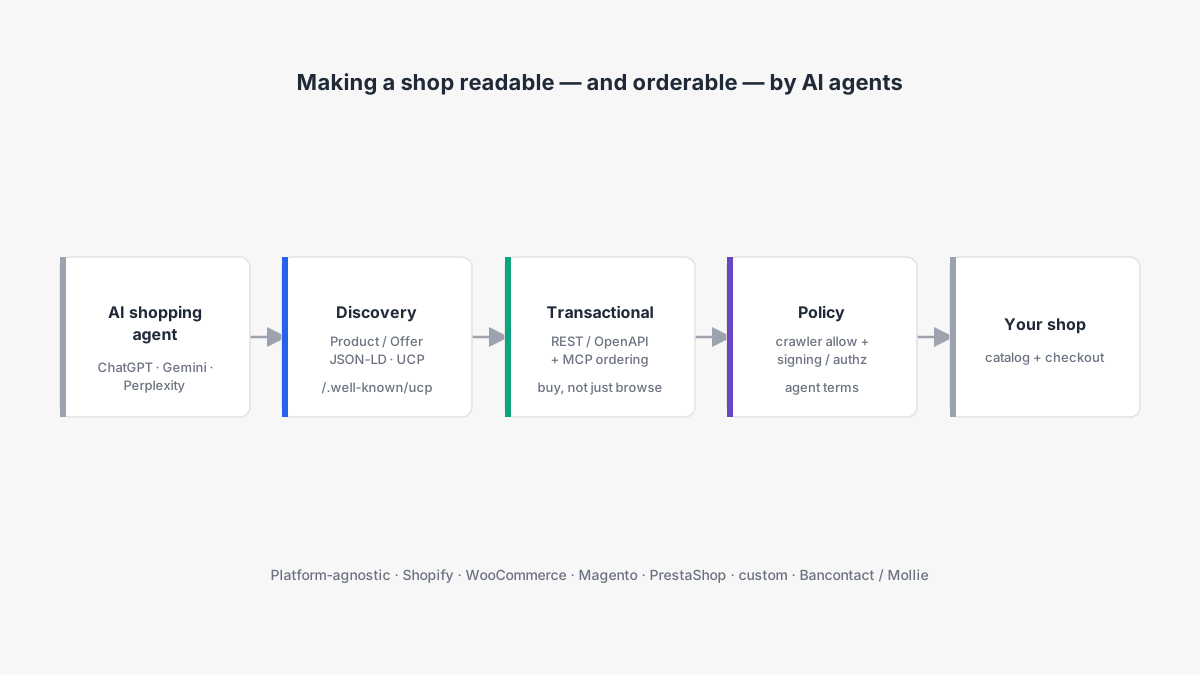
Shopping is moving into the agents. ChatGPT, Gemini, Perplexity and Google AI Mode no longer just send visitors to a product page — they compare options, check stock and, increasingly, complete the purchase on the shopper’s behalf. A webshop that is built for human eyes only is invisible to that flow. Agentic commerce readiness is the work of making a shop legible to those agents, all the way from “can you find what I sell?” to “can an agent place an order?”
It has three layers. Discovery is structured data done properly — schema.org Product, Offer and Store markup, a maintained /.well-known/ucp manifest, and a catalogue an agent can parse rather than scrape. Transactional is the ambitious end: an agent-readable surface (REST endpoints, an OpenAPI description, or a Model Context Protocol server) so an agent can query live availability and place an order instead of only browsing. Policy is the boring, decisive part — which crawlers are allowed, how agent-mediated orders are signed and authorised, and the terms that govern them.
This sits on top of the open protocols now consolidating the field: UCP (Universal Commerce Protocol) for discovery through checkout, ACP (Agentic Commerce Protocol) for agent payments, and MCP as the connective tissue between an agent and the commerce stack. The protocols are platform-agnostic, and so is this work — it applies equally to Shopify, WooCommerce, Magento and a custom build, with the heavier lifting on PrestaShop and bespoke shops where nothing comes out of the box.
The part the existing tooling does not cover is the actual implementation. Validation services will tell a merchant their manifest is missing or malformed; they do not fix the platform, wire up a Belgian payment handler such as Bancontact or Mollie, or build the ordering surface. That is the gap D-Soft closes — turning a diagnosis into a shop an agent can actually transact with, drawing on the same FastMCP and retrieval-engineering work that makes coding agents reliable elsewhere on this site. The site you are reading is itself the proof: it serves an /llms.txt index and ProfessionalService structured data so AI crawlers read it correctly today.